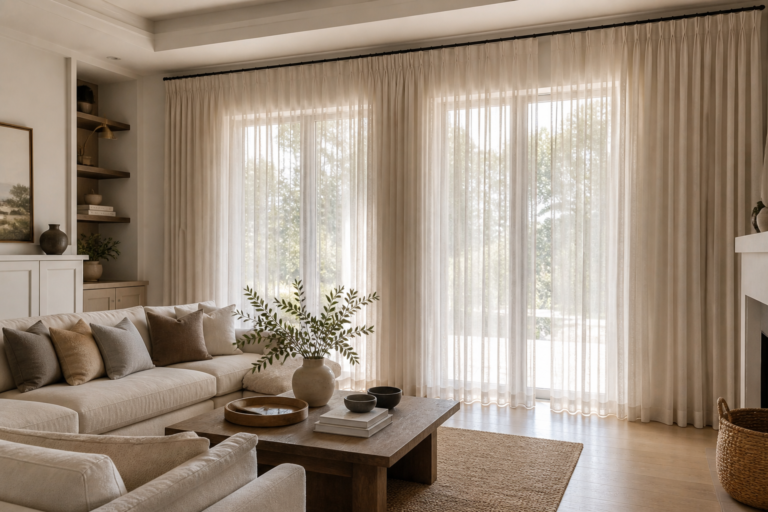
Ripple fold drapery is defined by its continuous wave-like folds created through a precision track system. The fabric moves effortlessly in uniform curves, producing a clean and architectural look. Ideal for large windows and contemporary interiors, it is often used with sheers or textured linens and can be fabricated for both indoor and covered outdoor applications.
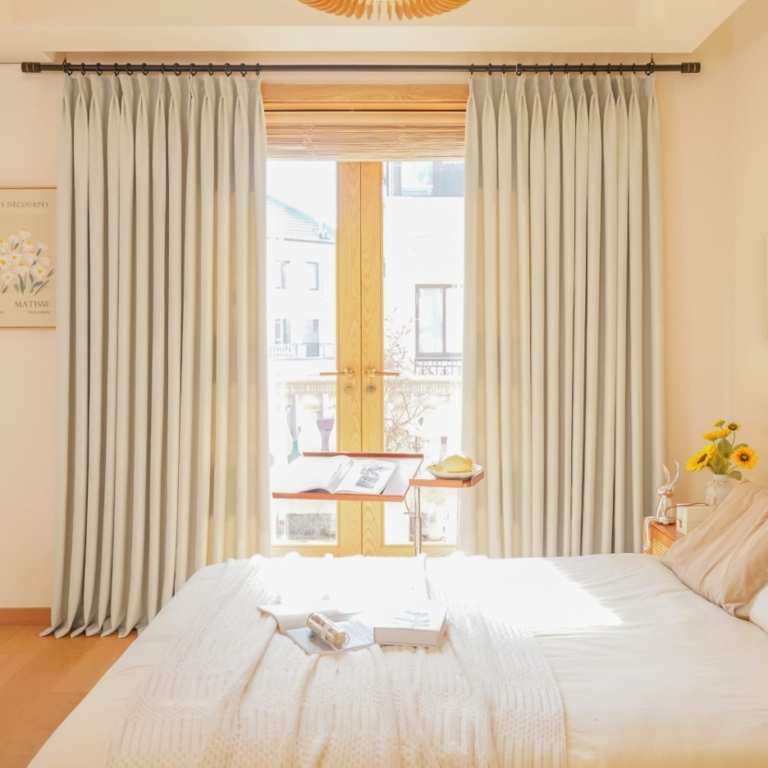
Pinch pleat drapery features pleats stitched at the header, forming elegant vertical folds that highlight the richness of the textile. This timeless style is often used in refined interiors where tailored detailing and luxurious fabrics are desired. It can also be adapted for outdoor spaces when crafted with performance textiles
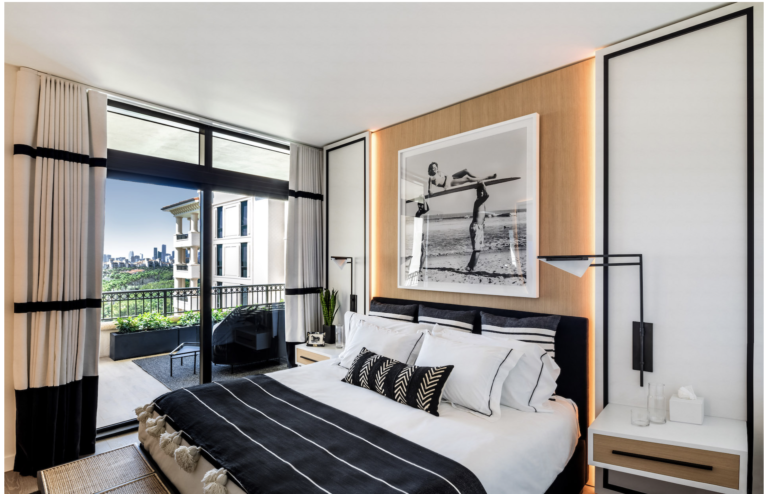
Tailored pleat drapery offers a softer interpretation of classic pleating. The structured header allows the fabric to fall in clean, elongated folds that emphasize texture and craftsmanship. It is frequently used in contemporary and transitional interiors where quiet elegance is desired.
Inverted pleat drapery features pleats constructed on the reverse side of the panel, allowing the front of the fabric to remain smooth and uninterrupted. This understated style is ideal for modern interiors where clean lines and material expression are central to the design.
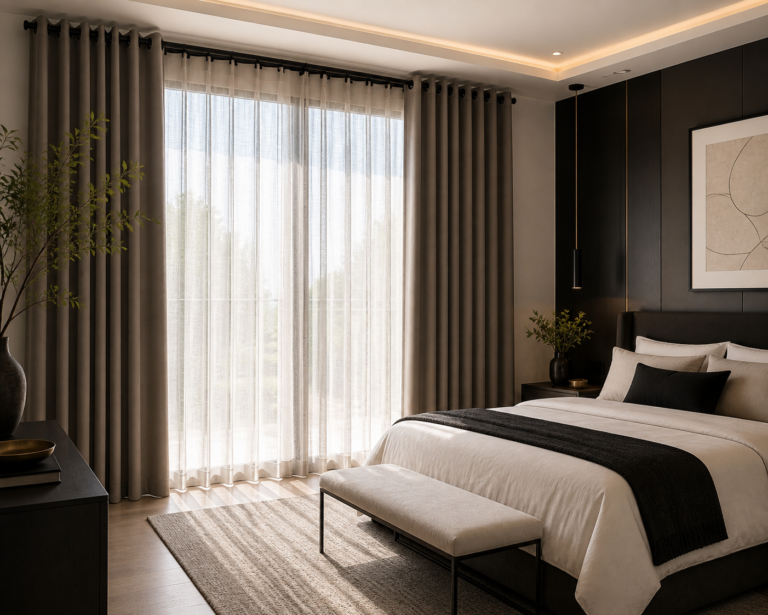
Grommet drapery is distinguished by metal rings inserted into the fabric header, allowing panels to glide directly along a decorative rod. The rings create evenly spaced folds that give the treatment a relaxed, modern character. Often used in contemporary interiors where visible hardware is part of the design.
Rod pocket drapery is constructed with a sewn channel through which the rod is inserted, allowing the fabric to gather naturally along the top. This style creates soft, relaxed folds and is typically used for decorative panels or lightweight sheers in intimate spaces.